A single uncovered spot in a Midtown garage can cost more per month than a studio apartment rent in parts of upstate New York. That is not an exaggeration about real estate math in Manhattan; it is the baseline reality anyone searching for cheap monthly parking NYC has to accept before negotiating anything. The good news is that «cheap» is relative, and with the right borough, building, and booking strategy, drivers can still land a monthly rate well under the citywide averages that make headlines.
This guide breaks down what monthly parking actually costs across boroughs, why Manhattan skews so high, and eleven concrete ways to find a more affordable spot without getting blindsided by hidden fees.
1. Understand the Manhattan Price Ceiling First
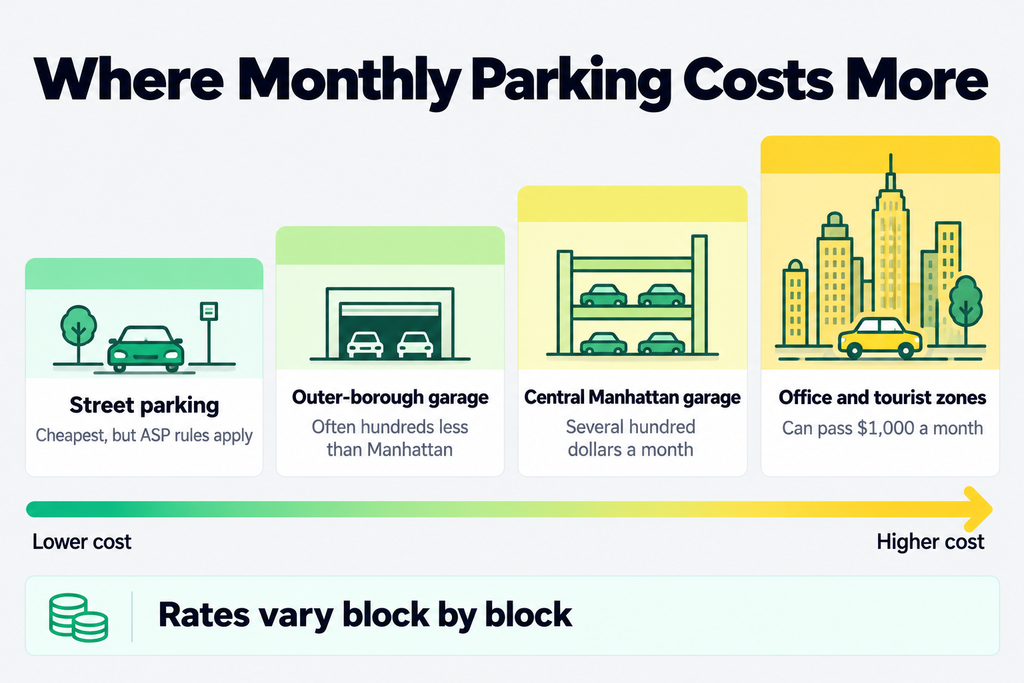
Private garages in central Manhattan often charge several hundred dollars a month, and operators near major office corridors or tourist zones can push well past $1,000. Prices vary block by block, so two nearly identical spots on the same avenue can carry very different rates. Browse the Manhattan garage listings to see how rates compare by area.
The spread exists because Manhattan garages price based on land value, not just square footage. A garage two blocks from a subway hub or a hospital complex has pricing power that an identical structure in a quieter corridor does not. Before assuming Manhattan is universally out of reach, check several blocks in the same neighborhood rather than one.
2. Check Public and City-Affiliated Options First
Some public or city-affiliated parking facilities may offer monthly or permit-style rates below nearby private garages. These options are limited in number and location, so treat them as a possible low-cost starting point rather than a guarantee.
A commuter working near a public facility in Lower Manhattan or near a civic center may find a permit-style monthly rate that beats every private competitor nearby. Availability is the catch. Capacity is limited, so it pays to ask early and check back rather than assuming a spot will be open.
3. Look Seriously at Outer-Borough Garages
Monthly parking in Queens, the Bronx, Brooklyn, and Staten Island is consistently cheaper than Manhattan, often by hundreds of dollars. A garage near a residential corridor in Queens or Brooklyn may charge noticeably below Manhattan’s private-garage rates, simply because land costs and foot traffic are lower. Check the Brooklyn and Queens garage pages in the directory for options.
This works best for residents who do not need to park directly at their Manhattan workplace. Combining an outer-borough monthly spot with a subway or bus commute can cut total transportation cost significantly compared to parking near the office every day. The trade-off is a longer commute leg, which is worth mapping out before committing to a lease-style monthly contract.
4. Choose an Open-Air Lot Over a Structured Garage
Uncovered lots are almost always cheaper than multi-level structured garages with attendants, elevators, and climate control. The convenience premium of a structured garage, especially one with self-park access or valet retrieval, shows up directly in the monthly invoice.
A driver willing to walk an extra block and accept weather exposure can often save noticeably compared to the nearest covered facility. This matters most for vehicles that are not driven daily, since the car sits exposed for longer stretches. It is a reasonable trade for anyone chasing cheap monthly parking NYC options rather than premium convenience.
5. Ask About Off-Peak or Part-Time Plans
Some garages offer reduced monthly rates for vehicles that only need overnight or weekend access, rather than full 24/7 in-and-out privileges. These part-time plans exist because garages can double-book a single spot between a daytime commuter and an overnight resident.
This fits drivers who use a car mainly on weekends or who work from home several days a week. Before signing up, confirm exactly which hours are included, since an off-peak plan that excludes early morning retrieval can create real scheduling conflicts for anyone with an inconsistent routine.
6. Use Parking Apps to Compare Listings Side by Side
Platforms like SpotHero and iPark function less like booking engines and more like price-comparison tools, surfacing garages by neighborhood, access hours, and monthly versus daily rates. Listings on these marketplaces show just how wide the range runs between outer-borough lots and premium Manhattan garages. For a full rundown, see our guide to the best parking apps in NYC.
Checking three or four apps for the same neighborhood often reveals a spread of several hundred dollars for comparable spots. App-based services sometimes advertise headline-low monthly prices, but these frequently come with location, capacity, or time-window restrictions, so confirming the fine print before committing matters more than chasing the lowest number shown on a results page.
7. Watch for App-Exclusive Discounted Inventory
Some garages hold back a portion of their monthly spots exclusively for app partnerships, often at a price below the posted walk-in rate. These discounted blocks are not always advertised on the garage’s own signage or website.
This is one of the few places where real savings show up without sacrificing location. The limitation is volume: app-exclusive inventory tends to sell out fast, especially in high-demand neighborhoods, so checking frequently or setting alerts is more effective than a single search.
8. Negotiate Directly With Garage Managers
Posted monthly rates are often a starting point, not a fixed price, especially at independently operated garages rather than large chain facilities. Managers sometimes have flexibility to offer a lower rate for longer commitments, off-peak hours, or smaller vehicles.
A simple phone call or in-person visit asking whether the posted rate is negotiable costs nothing and occasionally yields a meaningful discount. This works better in person than through an app, since a manager weighing an empty spot against a slightly discounted occupied one has a direct incentive to make a deal.
9. Check Residential Buildings With Spare Spots
Some apartment buildings and condo complexes have parking garages with capacity beyond their own residents, and they rent the overflow to outside drivers, sometimes at a rate below nearby commercial garages. These arrangements are not always listed on major parking apps, so finding them often requires asking directly or checking community boards.
This option suits drivers who live or work near a residential building with underused parking. It is worth confirming the lease terms carefully, since residential garage arrangements can include different rules on guest access, hours, or notice periods than a standard commercial monthly contract.
10. Factor In Taxes, Fees, and Minimum Terms Before Comparing Prices
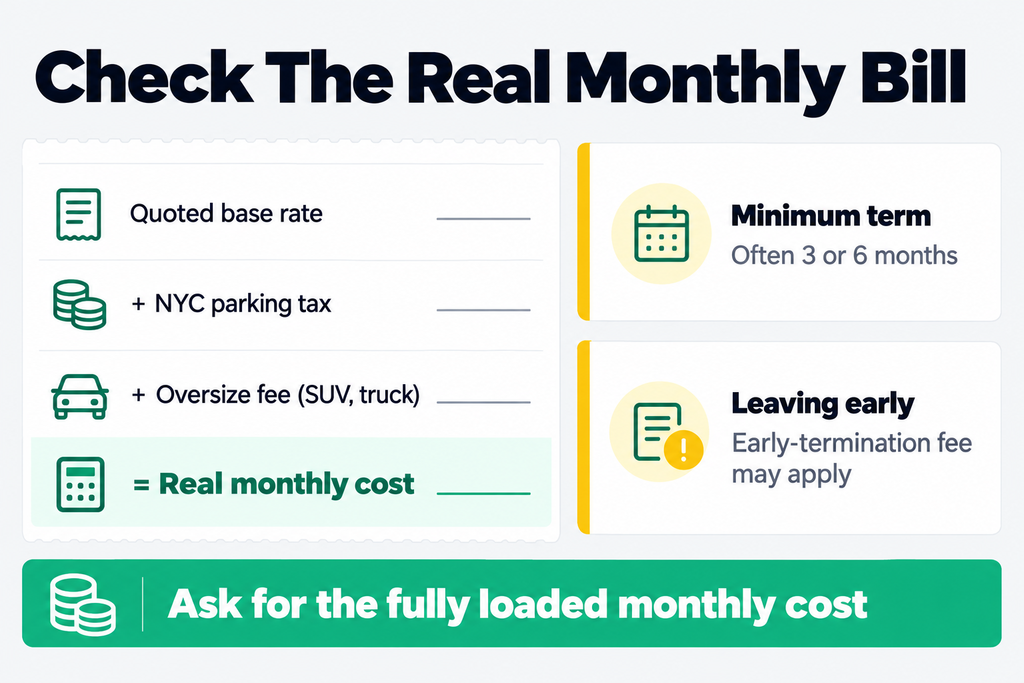
A quoted monthly rate rarely reflects the final bill. New York City parking carries a local tax on top of the base rate, and many garages add oversize vehicle surcharges for SUVs, trucks, or anything exceeding standard length and height limits. Some facilities also require a minimum term, such as three or six months, with an early-termination fee for breaking the agreement sooner.
Two garages quoting the same base monthly price can end up hundreds of dollars apart once taxes and oversize fees are applied. Always ask for the fully loaded monthly cost, not just the advertised headline number, before comparing one garage against another.
11. Treat Street Parking as a Conditional Alternative, Not a Free Pass
For drivers willing to manage the logistics, legal street parking remains the cheapest option by far, but it comes with real constraints tied to alternate side parking (ASP) rules. Missing a scheduled street-cleaning window can mean a ticket that erases any savings from skipping a monthly garage. Use our free street parking map to find legal spots, and read safe places to park in NYC before leaving a car overnight.
Recent updates to meter and mobile-payment systems have changed some day-to-day parking logistics citywide, which can indirectly affect how people plan around metered versus monthly arrangements. Anyone considering street parking as a primary strategy should check current ASP status before relying on it, since suspension schedules shift around holidays and seasonal cleaning calendars. The live status page at parkruleslive.com/is-asp-in-effect/new-york-alternate-side-parking/ is a practical way to confirm whether rules are in effect on a given day before leaving a car on the street overnight. Check the alternate side parking status before you leave your car.
Conclusion
Cheap monthly parking NYC almost always involves a trade-off: location, covered versus open-air, full access versus off-peak hours, or convenience versus a longer commute. Drivers aiming for a lower monthly rate should start with public facilities and outer-borough garages, then layer in app-exclusive deals and direct negotiation before settling for a standard Manhattan posted rate. For ongoing comparisons by neighborhood and facility type, the parking directory is a useful next stop.
This article is for general informational purposes and is not legal or financial advice. Confirm current rates and terms directly with garage operators or official city sources before signing any agreement.